
Bimatoprost Eyelash Growth Formula. Longer, fuller, darker lashes in 12 to 16 weeks.
Hypotrichosis, or inadequate eyelashes, is a treatable condition. Bimatoprost is a prostaglandin analog formulated to extend the active growth phase of eyelash follicles, producing visibly longer, thicker, and darker lashes through a biological mechanism entirely different from systemic hair loss treatments.
Bimatoprost is an FDA-approved prostaglandin analog for eyelash hypotrichosis. Applied once nightly to the upper eyelid margin, it stimulates the anagen (growth) phase of individual lashes while simultaneously increasing the number of follicles in active growth. Results are gradual, consistent, and fully reversible if treatment is stopped.
Most patients achieve full results within 12 to 16 weeks of nightly use. Once you reach your target, maintenance is simple: continue nightly application to sustain results. 3-month supply. Coming Soon.
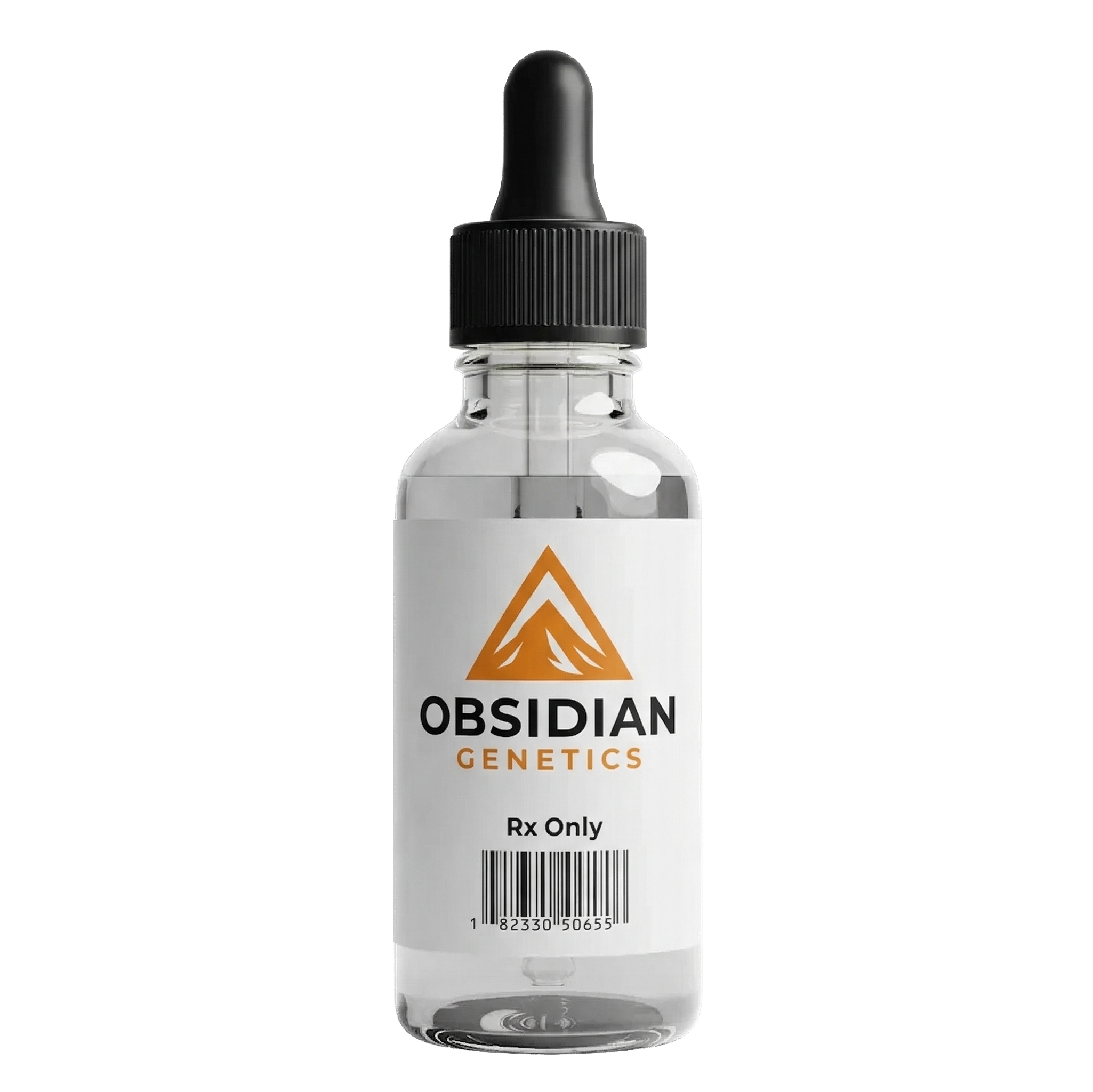
Eyelash Growth Rx
The clinical evidence behind eyelash growth.
Bimatoprost does not rely on luck. It relies on follicle biology. These numbers show what the research supports.
Individual results vary. Clinical trial outcomes reflect the FDA-approved indication for hypotrichosis. Bimatoprost is prescribed off-label for cosmetic eyelash enhancement at Obsidian Genetics.
How bimatoprost makes eyelashes grow.
Bimatoprost works at the follicle level by modulating prostaglandin receptor signaling, a pathway entirely separate from hormonal hair loss mechanisms. Here is how it works.
Anagen Phase Extension
Bimatoprost is a prostaglandin F2α analog that binds follicle prostaglandin receptors, prolonging the anagen (active growth) phase of eyelash follicles. This extension means individual lashes remain in the growth phase longer, resulting in increased final hair length.
Follicle Recruitment
Beyond extending growth duration in existing active follicles, bimatoprost increases the proportion of follicles simultaneously in the growth phase. The result is not just longer lashes, but also more lashes in active growth at the same time, producing visibly fuller lash lines.
Pigmentation Enhancement
Activation of prostaglandin receptors in lash follicles stimulates melanogenesis (pigment production) in the lash matrix. This results in naturally darker lash color as a secondary effect of the prostaglandin pathway activation, with no added dyes or pigments.
How to use Bimatoprost. The application protocol.
Correct application is essential for results and safety. Follow these steps nightly for 12 to 16 weeks to achieve full growth.
Cleanse
Remove makeup and contact lenses. Cleanse eyelids thoroughly with a gentle cleanser and pat dry with a clean cloth. No makeup or debris should remain on the eyelid.
Apply
Using the provided sterile applicator, apply one drop of bimatoprost along the upper eyelid skin at the base of the upper lashes, drawing a thin line like eyeliner. Do not apply to the lower lid.
Blot
Blot any excess solution with a clean tissue immediately. Excess solution on the lower eyelid or surrounding skin can cause unwanted hair growth in those areas. Precision prevents side effects.
Maintain
Apply nightly at the same time each day. Consistency is essential. Once you reach your desired results, continue nightly use to sustain the growth. Results fade over 4 weeks if treatment stops.
What to expect. The eyelash growth timeline.
Results are gradual. Here is a realistic week-by-week breakdown of what you will see as bimatoprost works.
Weeks 1–4
Lashes begin growing; changes may not be visibly noticeable yet. Follicles are transitioning into active growth phase.
Weeks 4–8
Length increase becomes apparent to the user. Some darkening may begin. Lashes are noticeably fuller to self and close observers.
Weeks 8–12
Significant length and fullness increase. Darkening is more prominent. Visible change is now clear in most lighting conditions.
Weeks 12–16
Full results achieved. Maximum length, thickness, and darkness. Maintain with continued nightly application. Results plateau at this point.
If Stopped
Lashes gradually return toward baseline over approximately 4 weeks. No rebound overgrowth; simple return to natural state. Reversal is complete and harmless.
Safety and potential side effects.
Bimatoprost is well-tolerated when applied correctly. The most important warning involves iris pigmentation. Here is what you need to know.
Iris Pigmentation (Most Important)
If bimatoprost solution contacts the iris (the colored part of the eye), it can cause permanent brown pigmentation in lighter-colored irises. This is the most significant potential side effect. Correct application to the upper eyelid margin prevents this. Apply precisely; blot excess immediately. Avoid letting solution run into the eye.
Periorbital and Eyelid Darkening
The skin around the eye (periorbital area) and the eyelid itself may darken slightly with use. This darkening is reversible and typically resolves within several weeks after stopping treatment. It results from increased melanin production in the skin, similar to the darkening effect on lashes.
Unwanted Hair Growth
Bimatoprost can stimulate hair growth in any area where it contacts skin. If solution spreads to the cheek, lower lid, or surrounding facial skin, fine hair may grow in those areas. This is why precise application and blotting excess is essential. Growth will resolve after stopping treatment.
Ocular Irritation
Some users report mild eye redness, irritation, or a burning sensation. These effects are typically transient and self-limiting. If irritation persists, contact your provider. Do not apply if you have active eye infections or significant ocular disease without provider approval.
Important: Glaucoma and intraocular pressure.
Bimatoprost is also used as a glaucoma medication to lower intraocular pressure (IOP). If you have glaucoma, ocular hypertension, or take IOP-lowering medications, you must disclose this to your Obsidian Genetics provider before starting treatment. Your provider will assess whether bimatoprost is appropriate for your eye health. Regular eye exams are recommended if you have any history of glaucoma or elevated IOP.
Pricing
Bimatoprost Protocol Pricing
One flat rate. Physician supervision, compounded medication, and ongoing support included.
One-time purchase. Sterile applicators included.
Includes: physician consultation · compounded medication · ongoing provider support · free shipping
Frequently asked question
What can I expect with Bimatoprost treatment?
Expect gradual eyelash growth over 12 to 16 weeks of consistent nightly use. Most patients notice longer lashes first, typically within the first 4 to 8 weeks. Increased fullness and darkening develop over the full treatment period as more follicles move into the active growth phase. Results require ongoing nightly use to maintain. Once you stop, lashes gradually return to baseline over approximately 4 weeks. There is no permanent change from bimatoprost alone; all results are reversible.
Will my eyelashes stay long if I stop using it?
No. Results are not permanent. Bimatoprost extends the growth phase of individual follicles and increases the number of follicles in active growth. When you stop applying it, follicles return to their natural growth cycle. Lashes gradually revert to their baseline length and fullness over approximately 4 weeks. There is no lingering benefit after stopping; the effect is entirely dependent on ongoing treatment.
Is there a risk of permanent eye color change?
Yes, there is a real risk if bimatoprost solution contacts the iris. If the medication reaches the colored part of your eye, it can cause permanent brown pigmentation in lighter irises (blue, green, hazel eyes are at higher risk than dark brown eyes). This is why precise application to the upper eyelid margin only is essential. Apply carefully, blot excess immediately, and avoid letting solution run into the eye. If you have any concern about solution contact with your eye, contact your provider immediately.
Can it be used for scalp hair loss?
Currently, bimatoprost is prescribed at Obsidian Genetics for eyelash growth only. Emerging research suggests potential scalp applications, but this is not yet an established or FDA-approved use. The evidence for scalp efficacy is much less robust than for eyelashes, and results are highly variable. Scalp hair loss is often driven by hormonal factors (DHT in androgenetic alopecia) that bimatoprost does not address. If and when scalp protocols are established based on new clinical evidence, Obsidian Genetics will update treatment options.
How is bimatoprost different from finasteride?
Bimatoprost and finasteride work through completely different biological pathways. Finasteride blocks the enzyme 5-alpha-reductase, which converts testosterone to DHT. DHT is the hormone that causes follicle miniaturization in androgenetic alopecia (genetic hair loss). Bimatoprost works via prostaglandin receptors to extend the growth phase of follicles and increase follicle recruitment, independent of DHT. Bimatoprost does not address the hormonal driver of genetic hair loss. The two medications complement each other in different ways: finasteride is for hormone-driven scalp loss; bimatoprost is for extending follicle growth phase in eyelashes and potentially other areas.
FDA Approval Status: Bimatoprost is FDA-approved for the treatment of hypotrichosis (inadequate eyelashes). At Obsidian Genetics, bimatoprost is prescribed for cosmetic eyelash enhancement, which is an off-label use. Off-label prescribing is legal and common when a provider determines it is appropriate for a patient's goals and medical history.
Not Medical Advice: The content on this page is for informational purposes only and does not constitute medical advice, diagnosis, or treatment. Consult a qualified healthcare provider before starting any new treatment. All Obsidian Genetics prescriptions are issued following a clinical review by a licensed provider.
Mechanism and Reversibility: Bimatoprost extends the anagen (growth) phase of eyelash follicles through prostaglandin F2α receptor agonism. All effects are reversible; lashes return to baseline within approximately 4 weeks of stopping treatment. Iris pigmentation, if it occurs from solution contact with the eye, is permanent and is the most significant potential side effect.
Clinical Evidence: Eyelash growth efficacy is supported by FDA pivotal clinical trial data evaluated against the Global Eyelash Assessment (GEA) scale at 16 weeks; refer to the FDA-approved Latisse prescribing information for complete trial results. Scalp hair applications remain in the research phase with limited clinical evidence and are not currently prescribed at Obsidian Genetics. Individual results vary.
Bimatoprost is a prostaglandin analog and the active pharmaceutical ingredient referenced throughout this page. Obsidian Genetics is a telehealth platform connecting patients with licensed providers. ©2024 Obsidian Genetics. All rights reserved.