Two proven mechanisms. One tablet. Better results than either alone.
Male pattern hair loss has two independent drivers. DHT shrinks the hair follicle over time, and reduced blood flow to the scalp starves it of the nutrients needed to grow. Finasteride blocks the hormone. Minoxidil revitalizes the blood supply. Separately, each works. Together in one daily tablet, they address both mechanisms simultaneously; this combination approach outperforms either drug used alone in clinical studies.
This is the scientific foundation of combination therapy for androgenetic alopecia. One tablet, two solutions. Prescriptions include clinical assessment by your Obsidian Genetics provider and ongoing monitoring to track response and manage any side effects.
Most patients begin treatment with full awareness of the timeline; meaningful improvement typically shows by month 6, with continued gains through month 12 and beyond with consistent use.
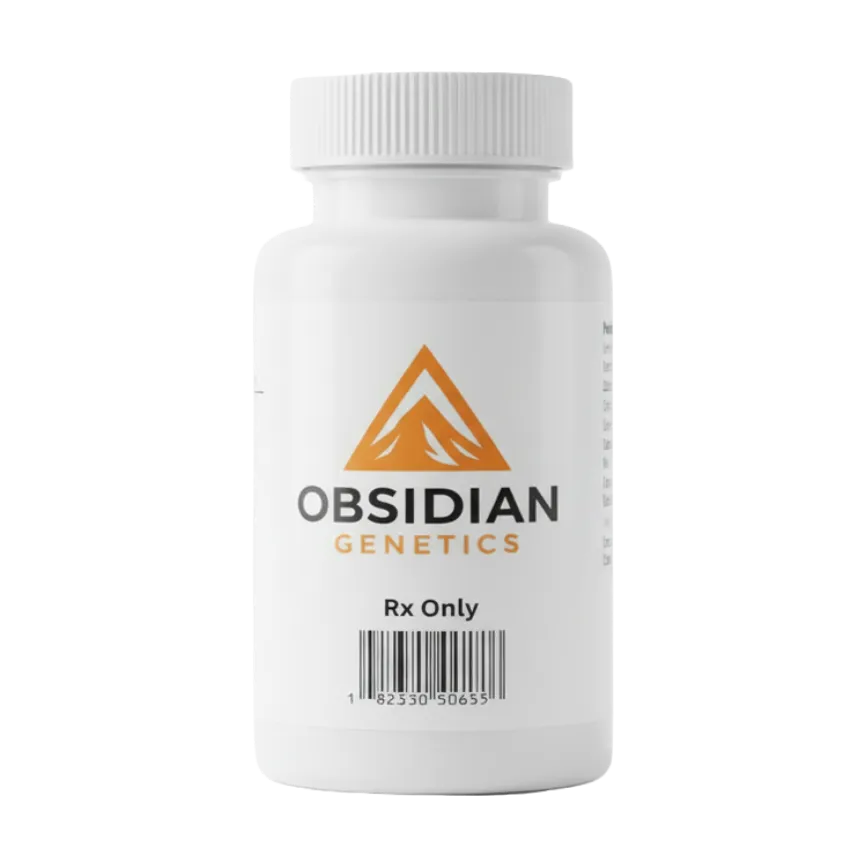
Minoxidil / Finasteride Oral
Hair loss, by the numbers. What the research shows.
Both finasteride and minoxidil are FDA-approved and widely prescribed. Their mechanisms are complementary, and the data supports their use together.
Individual results vary significantly. Hair loss is multifactorial; genetic predisposition, age, and baseline hormone levels all influence response. Neither finasteride nor minoxidil works for 100% of patients. Some patients experience side effects that limit tolerability. This combination is compounded and used off-label for hair loss; while both components are FDA-approved individually, the combined tablet formulation is prepared by a licensed compounding pharmacy.
Two mechanisms. One biology of hair loss. Better together.
DHT Blockade
Finasteride inhibits Type II 5-alpha reductase, the enzyme that converts testosterone to DHT. In androgenetic alopecia, DHT binds to receptors in genetically susceptible hair follicles, triggering miniaturization. Reducing scalp DHT by approximately 64% (Drake 1999) substantially blunts this hormonal driver of hair loss.
Vasodilation & Follicular Circulation
Minoxidil is a potassium channel opener that dilates blood vessels around hair follicles. It increases oxygen and nutrient delivery to the hair bulb, extending the anagen (active growth) phase of the hair cycle. Better blood flow means better fueling of the follicle.
Synergistic Dual Action
Finasteride stops the hormonal damage; minoxidil simultaneously stimulates regrowth and prolongs the growth phase. Used together, they address both cause and consequence of androgenic alopecia far more effectively than either alone.
What patients use this combination for.
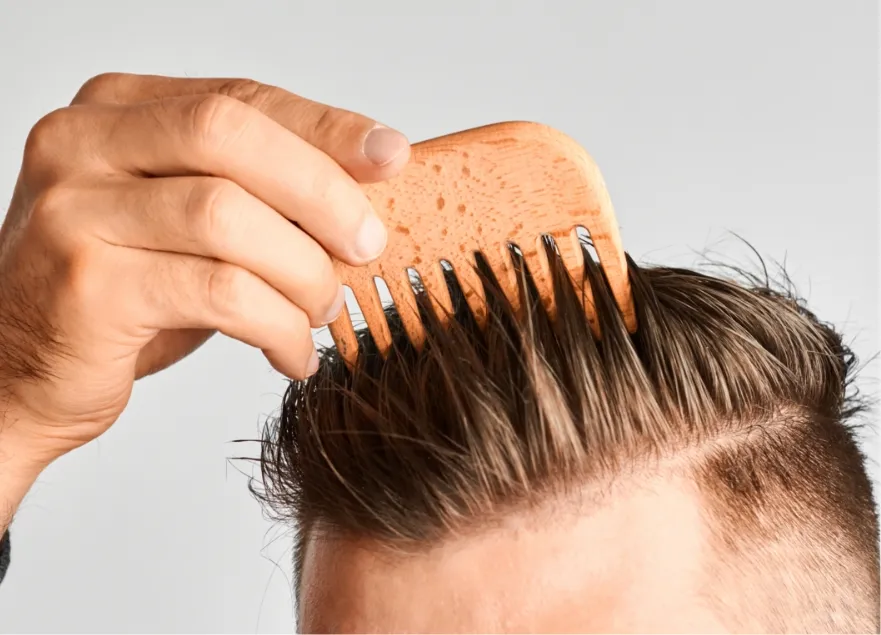
Finasteride alone vs. Minoxidil alone vs. Combination.
Both drugs are effective independently. Together, they're more effective. Here's why.
| Comparison | Finasteride Alone (1mg) | Minoxidil Alone (1-2.5mg oral) | Combination (this product) |
|---|---|---|---|
| Mechanism | DHT blockade only; stops miniaturization | Vasodilation only; stimulates growth | ✓ Dual action on both causes |
| FDA Approval Status | FDA-approved for male pattern baldness | Off-label (topical approved; oral studied) | Compounded formula |
| Hair Loss Prevention | Strong; stops DHT-driven loss | Minimal; does not address DHT | ✓ Strong on both fronts |
| Hair Regrowth Stimulation | Minimal; indirect only | Strong; direct follicle stimulation | ✓ Strong on both fronts |
| Overall Hair Count Improvement | Moderate; slows loss | Moderate; stimulates growth | Superior; addresses both |
| Best Patient Profile | Those focused on prevention | Those focused on regrowth | Those seeking optimal results |
| Main Limitation | Does not stimulate new growth | Does not stop hormonal loss | ✓ Addresses both limitations |
What to expect month by month.
Months 1–3
Both mechanisms activate. DHT suppression begins immediately; minoxidil stimulation begins within days. Many patients experience temporary shedding in weeks 2-4; this is normal and reflects the transition of old hairs out of the cycle. Do not stop treatment during this phase.
Months 3–6
Shedding phase resolves. Hair density stabilizes as new growth begins to mature. DHT suppression is now well-established, approximately 64% scalp DHT reduction, per Drake 1999. Circulation improvements are supporting new follicle activity. Subtle improvements may become noticeable by month 5-6.
Months 6–9
Measurable improvement in hair count and density. New hairs are thicker and more pigmented. Hairline may appear fuller; crown density improving. Most patients report noticeable results by month 6-9 of consistent daily use. Improvements continue to compound through month 12.
Month 12+
Full response achieved. Continued daily use maintains results. Hair loss stops; density plateaus at maximum improvement. To maintain these gains, consistent use is required indefinitely. Missing doses or stopping treatment results in gradual loss of benefit.
Safety and what to monitor.
Both finasteride and minoxidil are well-studied medications with established safety profiles. Side effects are usually mild and manageable.
⚠ Important Safety Information
Finasteride: Do not use if you have a history of prostate cancer or elevated PSA. Sexual side effects occur in a minority but should be discussed with your provider before starting. If you plan to father children, discuss with your care team; finasteride reduces semen volume and may affect fertility in some men. Minoxidil: Do not use if you have uncontrolled hypertension, a history of myocardial infarction, angina, or pericarditis. Minoxidil can cause fluid retention and increase heart rate; patients with cardiovascular history require baseline and periodic monitoring. Rare cases of pericardial effusion have been reported at higher doses. Drug interactions: Finasteride has minimal interactions. Minoxidil may interact with certain antihypertensive medications; your provider reviews all current medications before prescribing. Women: This combination is not recommended for women. Finasteride can cause feminization of male fetuses.
Frequently asked question
What is the actual dose in this tablet?
This combination tablet contains Minoxidil 1mg and Finasteride 1.25mg. Finasteride at 1mg is the FDA-approved dose for male pattern baldness. Minoxidil at 1mg is at the lower end of the therapeutic range studied for hair loss (typical oral doses are 1-2.5mg). Your Obsidian Genetics provider may adjust dose based on your individual response and tolerance.
Do I really need both? Can I just take finasteride or minoxidil alone?
Both drugs work, but separately they address only one mechanism. Finasteride blocks DHT but does not directly stimulate hair growth. Minoxidil stimulates growth but does not stop DHT-driven loss. Clinical evidence consistently shows that combination therapy outperforms either drug used alone in terms of hair count improvement and patient satisfaction. If you have strong concerns about using both, discuss alternatives with your provider.
What is hypertrichosis, and how common is it?
Hypertrichosis is increased body hair growth; minoxidil can trigger this as a side effect because it stimulates hair growth systemically, not just on the scalp. At the 1mg oral dose used in this combination, hypertrichosis is possible but not inevitable. Some patients experience mild body hair growth on the face, arms, or legs. This is not dangerous, and the effect is reversible if you stop treatment. If it becomes bothersome, discuss with your provider about dose adjustment.
How long before I see results with the combination?
Results build gradually. Some patients report early improvements in hair quality or thickness by month 3-4. Measurable improvement in hair count typically shows by month 6, with continued gains through month 12. The full benefit requires at least 6-12 months of consistent daily use. If you do not see improvement by month 6, discuss with your provider; dose adjustment or additional testing may be warranted.
Is this combination a lifelong commitment?
Yes. The combination works only while you are taking it consistently. Hair loss resumes when treatment stops. Many men view it as a long-term investment in hair preservation. The daily habit becomes routine. Before starting, consider your willingness to commit to daily medication use. Discuss your concerns about long-term commitment with your provider.
Important: This combination is a compounded preparation. Both finasteride and minoxidil are FDA-approved medications, but the combined tablet formulation is prepared by a licensed compounding pharmacy and is not an FDA-approved drug product. Compounded medications are not FDA-approved, and their safety and effectiveness have not been verified by the FDA. This product is prescribed following clinical review by a licensed healthcare provider. Prescription required. Individual results vary. Research statistics cited on this page reflect published clinical research; results with compounded medications have not been independently verified. All Obsidian Genetics prescriptions are issued following clinical review by a licensed provider. © 2026 Obsidian Genetics. All rights reserved.