
Compounded semaglutide and tirzepatide are not FDA-approved drug products. Micro-dose GLP-1 protocols are prescribed by a licensed provider. This represents off-label use of approved compounds, prepared by a licensed compounding pharmacy. Prescription required.

GLP-1 Therapy · Low-Dose Protocol

The benefits of GLP-1 — without the aggressive weight loss.

Micro Dose GLP-1 is a sub-therapeutic dosing protocol available in two compound options: semaglutide (single GLP-1 receptor agonist, 0.1–0.5mg weekly) or tirzepatide (dual GLP-1 / GIP receptor agonist, 1–2.5mg weekly). Both designed for metabolic optimization rather than significant weight loss.

At these precision doses, you retain the systemic benefits of GLP-1 receptor agonism — improved blood sugar regulation, reduced inflammation, cardiovascular protection, and emerging neuroprotective effects — while minimizing GI side effects and appetite suppression. Tirzepatide adds GIP receptor activity, which contributes to additional insulin sensitivity, lipid handling, and potentially stronger metabolic effects at proportionally lower doses.

Micro Dose GLP-1 is increasingly used as a maintenance protocol after weight loss, for metabolically healthy patients seeking longevity benefits, or for patients who need the therapeutic effects of GLP-1 without the intensity of full-dose therapy. Your provider will discuss which compound — semaglutide or tirzepatide — best matches your goals, prior response, and tolerance.

Physician consultation required · Free shipping

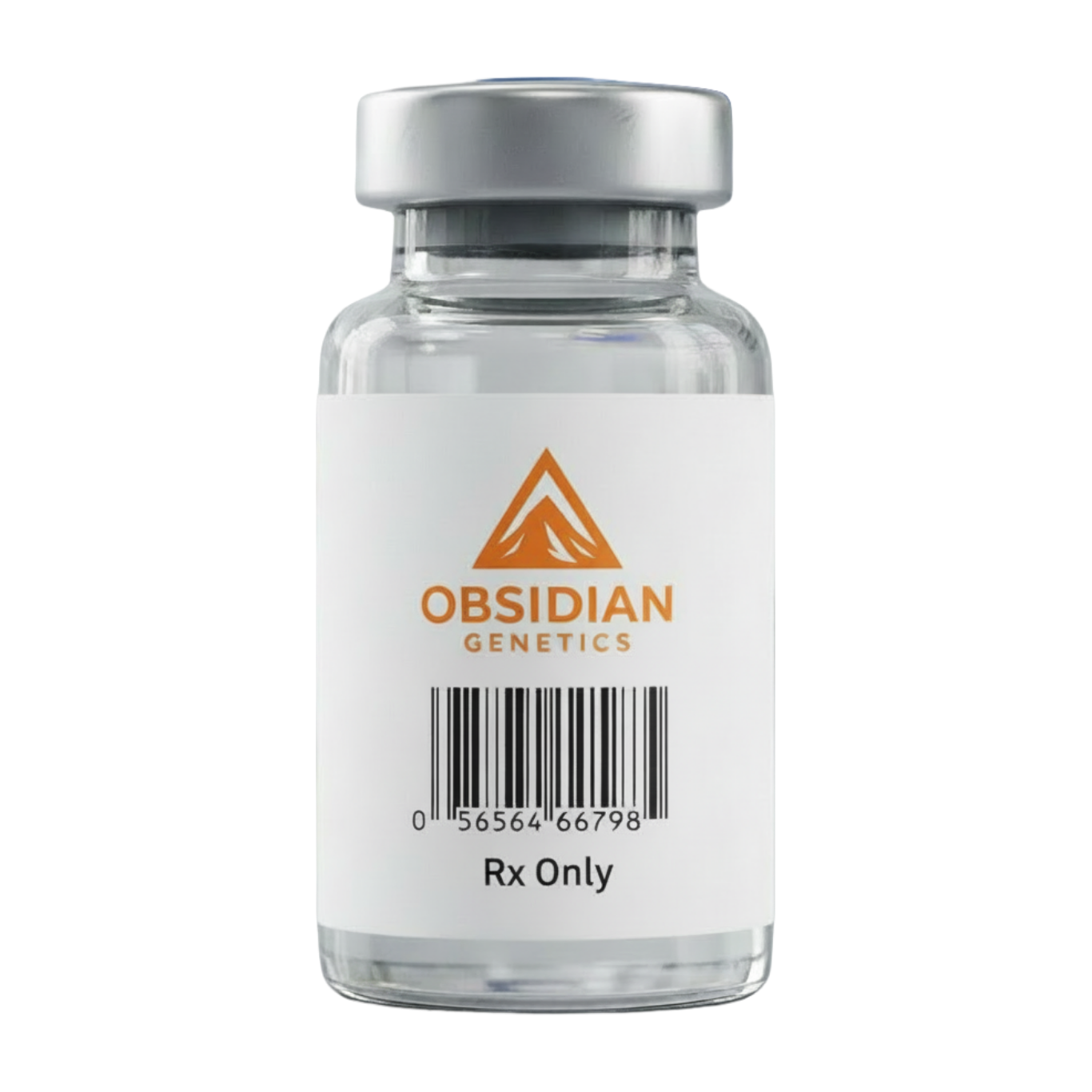
Micro Dose GLP-1

Compounded GLP-1 at precision doses (0.1–0.5mg). Metabolic optimization without the side-effect intensity of full-dose protocols.
Choose Compound
Compounded Semaglutide
Semaglutide 0.1–0.5mg — once-weekly subcutaneous injection. Single GLP-1 receptor agonist.
Select Plan:
100% Online
Board-Certified
Fast Shipping
Have a specific Dosage request or prefer compounded with Glycine or B6 instead - Contact US at
+1 503-406-1911 or support@obsidiangenetics.com
Protocol Comparison

What makes micro dosing different.

How low-dose GLP-1 therapy differs from standard weight-loss protocols.

Standard Protocol
Full-Dose GLP-1
Primary Goal
Weight loss
Dose Range
1–2.4mg semaglutide weekly
Expected Result
15%+ body weight loss
Side Effect Profile
Nausea, appetite suppression, GI distress (common)
Timeline
3–6 months for significant results
Micro Dose Protocol
Metabolic Optimization
Primary Goal
Metabolic health, maintenance, longevity
Dose Range
0.1–0.5mg semaglutide or equivalent tirzepatide
Expected Result
Stable weight, improved markers
Side Effect Profile
Minimal to none
Timeline
Sustained, ongoing protocol
Patient Fit
Who Benefits Most
Ideal Candidates
At goal weight seeking maintenance
Also Suited For
Metabolically healthy individuals interested in longevity
Alternative Path
Patients tapering from full-dose GLP-1
Special Consideration
Sensitive to side effects on higher doses
Not Recommended For
Patients requiring aggressive weight loss
The Science Behind Micro Dosing

Systemic benefits at precision doses.

GLP-1 receptor agonism delivers measurable health benefits across dose ranges — not just at full therapeutic levels.

Multi
Tissue receptor distributionGLP-1 receptors are expressed across multiple tissues — including pancreas, brain, heart, kidney, gut, and immune cells — supporting effects beyond glycemic control
20%
MACE reduction in SELECT trialSemaglutide 2.4mg reduced major adverse cardiovascular events by 20% vs. placebo in adults with overweight/obesity and established CVD without diabetes (Lincoff et al., NEJM 2023)
0.1–0.5mg
Micro-dose range vs. standardStandard semaglutide for weight loss: 1.0–2.4mg weekly. Micro-dose protocols use a fraction of the standard dose.
Lower GI side-effect intensityGLP-1 side effects (nausea, GI distress) are well documented as dose-dependent in published trials; micro-dose protocols aim to reduce intensity
SELECT TRIAL — Lincoff AM et al., Semaglutide and Cardiovascular Outcomes in Obesity without Diabetes, N Engl J Med. 2023;389(24):2221-2232. The SELECT trial primary endpoint (MACE) was reduced by ~20% with semaglutide 2.4mg vs. placebo in 17,604 adults with overweight/obesity and pre-existing cardiovascular disease.  | 
GLP-1 BIOLOGY — GLP-1 receptor expression across multiple tissues is well established in endocrinology literature (review: Drucker DJ, Cell Metab. 2018)

Clinical outcomes cited reflect published research on full-dose GLP-1 receptor agonists. Micro-dose protocols are an off-label use of approved compounds. Compounded formulations are not FDA-approved. Cardiovascular outcome data is from full-dose semaglutide trials; equivalent outcomes have not been established at micro-doses. Individual results vary. Prescription required.

Clinical Applications

Prescribed For

Metabolic health optimization
RESEARCH SUPPORTED
Blood sugar regulation & insulin sensitivity
RESEARCH SUPPORTED
Post-weight-loss maintenance
RESEARCH SUPPORTED
Cardiovascular risk reduction
RESEARCH SUPPORTED
Appetite calibration (not suppression)
RESEARCH SUPPORTED
Neuroinflammation reduction
EMERGING RESEARCH
Longevity & healthspan optimization
EMERGING RESEARCH

Pricing

Micro Dose GLP-1 Protocol Pricing

Choose your medication and plan. Your provider will determine the appropriate dosage after consultation.

Dual-Action

Micro-Dose Tirzepatide

From $169 / month

Dual GLP-1 + GIP receptor agonist compounded with B12.

1 month$169
3 months$459
6 months$864
12 months$1,548

Includes: physician consultation · compounded medication · ongoing provider support · free shipping

Treatment Timeline

What to expect over time.

Week 1–4

Dose Initiation

You begin at 0.1mg, the lowest therapeutic dose. Minimal to no side effects. Your body begins metabolic recalibration.

Month 1–2

Appetite Normalization

Appetite normalizes (not suppressed). Blood sugar stabilizes. You notice improved energy and reduced food noise without constant hunger suppression.

Month 2–3

Metabolic Improvements

Cardiovascular and inflammatory markers begin improving. Lab work shows positive metabolic shifts.

Ongoing

Maintenance Protocol

Micro-dose GLP-1 is designed as a sustained, ongoing protocol — not a short-term intervention. You maintain benefits with minimal side effects.

What You Get

A complete micro-dose program.

01

Physician consultation

Licensed provider reviews your health profile and determines the right micro-dose protocol and compound for you.

02

Compounded semaglutide or tirzepatide

Choice of either compound in micro-dose vials (0.1–0.5mg), prepared by a licensed compounding pharmacy.

03

Supplies & syringes

Everything you need for safe self-administration: syringes, alcohol pads, storage guidance.

04

Personalized dose protocol

Your provider prescribes a customized dosing schedule based on your goals — titration or maintenance.

05

Ongoing provider support

Check-ins, dose adjustments, side effect management, and provider access throughout your protocol.

fitness woman man sport exercise coach instructor utc
Important Information

Safety & Considerations

Semaglutide and tirzepatide are prescription medications. Your Obsidian Genetics provider will review your full health history before prescribing.

⚠ Important Safety Information

Do not use semaglutide or tirzepatide if you or a family member have a history of medullary thyroid carcinoma (MTC) or Multiple Endocrine Neoplasia syndrome type 2 (MEN 2). Animal studies have shown a potential association between GLP-1 receptor agonists and thyroid tumors — the risk to humans is not yet fully established. These medications are also not recommended if you have a personal history of pancreatitis.

Side effects at micro doses are rare. Unlike full-dose protocols, micro-dose GLP-1 typically presents minimal gastrointestinal side effects. If side effects occur, they are usually mild and improve quickly. At higher doses, common side effects include nausea, vomiting, diarrhea, or constipation — these are dose-dependent and extremely uncommon at micro doses. Risk of low blood sugar (hypoglycemia) increases if used with sulfonylureas or insulin — discuss medication interactions with your provider.

Frequently asked question

Standard protocols target significant weight loss (1–2.4mg doses) and are designed for 3–6 month intensive treatment. Micro-dose GLP-1 uses sub-therapeutic doses (0.1–0.5mg) and is designed as an ongoing maintenance protocol for metabolic optimization, not weight loss. You retain all the systemic benefits of GLP-1 receptor agonism — blood sugar regulation, cardiovascular protection, anti-inflammatory effects, and emerging neuroprotective benefits — while avoiding the intense appetite suppression and GI side effects of higher doses.

Micro-dose GLP-1 is not designed for weight loss. Most patients on micro-dose protocols maintain stable weight. If you are overweight and seeking significant weight loss, a standard higher-dose protocol is more appropriate. Micro dose is ideal if you have reached your goal weight and want to maintain it with the metabolic and longevity benefits of GLP-1 agonism.

Yes. Many patients complete a full-dose weight-loss protocol and transition to micro-dose for maintenance and longevity benefits. Your Obsidian Genetics provider will create a tapering schedule to safely transition you to your maintenance micro-dose, and continue supporting you through the adjustment.

Both compounds are effective GLP-1 receptor agonists used in micro-dose protocols. Tirzepatide is a GIP/GLP-1 receptor agonist with a broader mechanism. Your Obsidian Genetics provider will recommend which compound best matches your health profile and goals. Some patients prefer one over the other based on tolerance or individual response — your provider can help determine the best fit.

No. The branded semaglutide (Ozempic, Wegovy) and tirzepatide (Mounjaro, Zepbound) are FDA-approved for specific indications — weight loss and diabetes. Micro-dose protocols are off-label use, prescribed by a licensed provider and prepared by a licensed compounding pharmacy. This is a legal and common medical practice, but the low-dose protocol itself is not FDA-approved. Your provider will explain the off-label use and ensure it’s appropriate for your situation.

Research on full-dose GLP-1 receptor agonists shows benefits beyond weight loss: cardiovascular risk reduction (40% in the SELECT trial), improved kidney function, reduced inflammation, and emerging evidence for neuroprotective effects (relevant to Alzheimer’s and Parkinson’s disease research). These benefits appear to be dose-related — meaning they’re present across dosing ranges, not just at the highest doses. Micro-dose protocols capture these systemic benefits while maintaining a better quality of life with fewer side effects.

Choose Your Compound

Semaglutide vs Tirzepatide — which micro-dose fits you?

Both are compounded peptides administered as once-weekly subcutaneous injections at sub-clinical doses. They differ in receptor mechanism, dosing range, and the depth of long-term clinical data. Your provider will help you pick.

Single GLP-1 · Most Data

Micro-Dose Semaglutide

0.1–0.5mg once weekly · SC injection · GLP-1 receptor agonist

Mechanism: Selective GLP-1 receptor agonist. Mimics the natural incretin GLP-1 to enhance glucose-dependent insulin secretion, suppress glucagon, slow gastric emptying, and signal satiety. The mechanism behind Ozempic and Wegovy.

Strengths:

  • Longest clinical track record (~15 years of trial data at higher doses)
  • SELECT trial: 20% cardiovascular event reduction at full dose
  • FLOW trial: 24% kidney composite outcome reduction
  • Predictable, well-characterized side-effect profile

Best for: First-time GLP-1 users, patients prioritizing the largest published evidence base, anyone wanting the most-studied micro-dose option.

Dual GLP-1 / GIP · Broader Mechanism

Micro-Dose Tirzepatide

1–2.5mg once weekly · SC injection · Dual GLP-1 + GIP receptor agonist

Mechanism: Activates both GLP-1 and GIP receptors. GIP (glucose-dependent insulinotropic polypeptide) adds a second incretin pathway that contributes to insulin sensitivity, adipose-tissue lipid handling, and possibly stronger metabolic effects per dose. The mechanism behind Mounjaro and Zepbound.

Strengths:

  • Dual incretin activity — broader metabolic modulation than GLP-1 alone
  • SURMOUNT trials: superior weight loss to semaglutide at full dose
  • SURPASS trials: superior A1C reduction vs semaglutide in T2D
  • Often well-tolerated even when semaglutide causes nausea (different receptor profile)

Best for: Patients who plateaued on micro-dose semaglutide, those wanting broader incretin coverage, anyone who didn't tolerate semaglutide GI effects.

Quick Comparison
Feature
Semaglutide
Tirzepatide
Receptors
GLP-1 only
GLP-1 + GIP
Typical micro-dose
0.1–0.5 mg / week
1–2.5 mg / week
Brand-name equivalents
Ozempic, Wegovy, Rybelsus
Mounjaro, Zepbound
FDA approval (full dose)
T2D (2017), Obesity (2021), CV risk (2024)
T2D (2022), Obesity (2023)
Cardiovascular outcomes data
SELECT trial · 20% MACE reduction
SURPASS-CVOT ongoing
Best if you...
Want the most-studied option
Want broader mechanism or didn't tolerate semaglutide

Compounded micro-dose preparations of both peptides are off-label uses; the cited cardiovascular and weight-loss trials were conducted at full therapeutic doses. Micro-dose efficacy on these specific endpoints has not been independently established in dedicated RCTs. Your provider will discuss what is reasonable to expect at sub-clinical dosing.

FDA Approval Status: Both semaglutide and tirzepatide are FDA-approved at full therapeutic doses for type 2 diabetes and chronic weight management. Compounded micro-dose semaglutide and micro-dose tirzepatide are prepared off-label by a licensed compounding pharmacy and are not FDA-approved as finished compounded products. Compounded medications are prescribed at provider discretion following clinical review. Cardiovascular and metabolic outcomes data cited on this page (SELECT, FLOW, SURMOUNT, SURPASS) were derived at full therapeutic doses; micro-dose efficacy on these specific endpoints has not been independently validated in dedicated trials. Individual results vary. Pregnancy: Both peptides are contraindicated in pregnancy. Women of childbearing potential should use reliable contraception. Thyroid: Both carry boxed warnings for medullary thyroid carcinoma based on rodent data; not for patients with personal or family history of MTC or MEN-2. Pancreatitis: Disclose any history of pancreatitis during intake. Not Medical Advice: Content is informational only. All Obsidian Genetics prescriptions are issued following clinical review by a licensed provider. © 2026 Obsidian Genetics. All rights reserved.