
Tretinoin works. This formula works better.
Tretinoin is the most clinically validated topical anti-aging ingredient in dermatology, with more than 40 years of peer-reviewed research behind it. It stimulates collagen synthesis, accelerates cell turnover, and measurably reverses photoaging at the cellular level. Nothing else does what tretinoin does. The problem is how most people use it.
Standalone tretinoin causes dryness, peeling, and irritation that drives most patients to quit before seeing real results. The formulas here solve that. Niacinamide (4–5%) rebuilds your skin barrier and buffers tretinoin’s irritation potential, making consistent use sustainable. Then you pick a supporting third active: Hyaluronic Acid (0.5%) for maximum tolerability and pure hydration — the safest choice for retinoid newcomers — or Vitamin C (5%) for additive antioxidant + collagen synergy + mild brightening on already-tolerated tretinoin. Four formulas total, one prescription-strength result: tretinoin’s full benefit with far better tolerability than tretinoin used alone.
You can get tretinoin from a lot of places. This is tretinoin that’s actually designed to be used long enough to work. Available in three strength tiers. Coming soon — pricing to be announced.
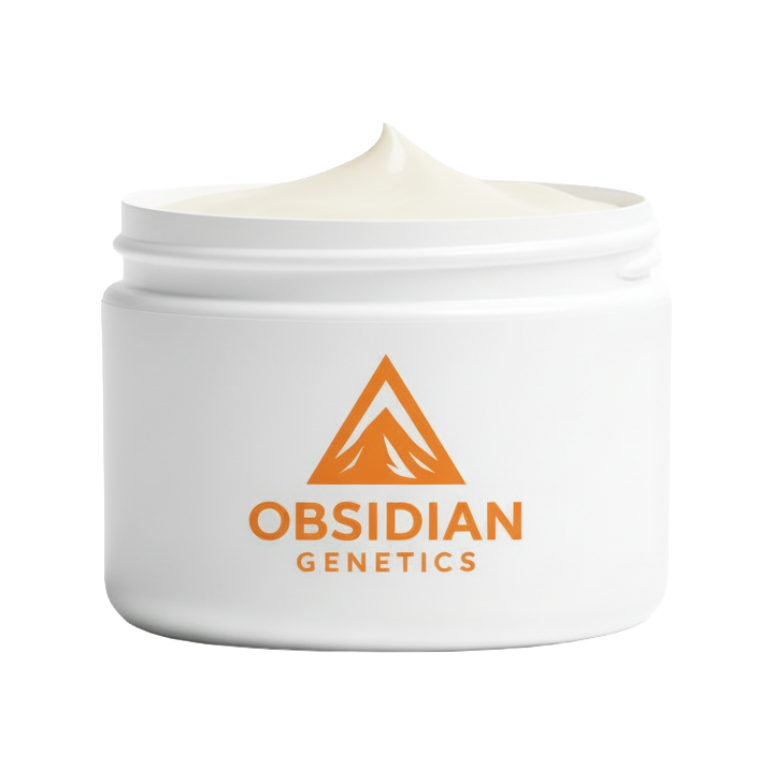
Anti-Aging Skin Cream
Why this combination has earned its place as the standard of care in prescription skincare.
These are not marketing claims. They are the numbers that established tretinoin as the most clinically validated topical anti-aging treatment in dermatology.
Why this combination outperforms any single ingredient alone.
Skin aging happens through several distinct processes simultaneously. This formula addresses all three at once, something no single active ingredient can do.
Tretinoin
0.03% / 0.06% / 0.089% (by tier)Tretinoin is the prescription retinoid derived from Vitamin A. It binds to nuclear retinoic acid receptors in skin cells, triggering two actions that no other topical ingredient can replicate: it accelerates cell turnover, replacing aged surface cells with fresher ones faster than the skin does on its own, and it stimulates new collagen synthesis in the dermis, structurally thickening and densifying skin over time.
Also inhibits matrix metalloproteinase (MMP) activity, the enzyme class responsible for collagen degradation. Addresses: fine lines, wrinkles, uneven tone, photoaging, sallowness, age spots.
Niacinamide
4% (all tiers)Niacinamide is a form of Vitamin B3 with a well-documented multi-role action in skin. It builds ceramides (the lipid molecules that form the skin's protective barrier), reducing transepidermal water loss and improving the skin's ability to tolerate active ingredients like tretinoin. It also reduces inflammation and inhibits the transfer of melanosomes from melanocytes to keratinocytes, addressing hyperpigmentation and uneven tone.
Critical buffer for tretinoin: niacinamide significantly reduces the irritation, redness, and peeling associated with tretinoin initiation, enabling consistent long-term use. Addresses: skin barrier, inflammation, redness, dark spots.
Hyaluronic Acid
0.5% (Sensitive / Normal / High tiers)Hyaluronic acid (HA) is a naturally occurring polysaccharide in the dermis and epidermis. Applied topically, it acts as a humectant, attracting and binding water molecules to the skin surface and upper dermis, creating visible plumping and hydration. HA in the skin decreases with age and with tretinoin-induced surface dryness, making its inclusion in this formula an essential counterbalance.
Works synergistically with tretinoin: HA offsets the dryness and surface tightness tretinoin causes, improving tolerability and maintaining the skin’s hydrated baseline throughout treatment. Addresses: fine lines from dehydration, plumpness, surface texture. Pick HA if you’re new to tretinoin, have sensitive skin, or struggled with retinoid dryness in the past.
Vitamin C (Ascorbic Acid)
5% (Antioxidant Path tier)Vitamin C is a potent antioxidant that also serves as an essential cofactor for the enzyme prolyl hydroxylase, which stabilizes newly synthesized collagen. Unlike HA (a passive humectant), Vitamin C actively contributes to anti-aging through three independent mechanisms: it neutralizes UV-generated free radicals before they damage dermal collagen, it directly supports the collagen your tretinoin-signaled fibroblasts are trying to make, and it modulates tyrosinase to give mild pigment-brightening benefit.
Works additively with tretinoin: while tretinoin drives cellular turnover and collagen signaling, Vitamin C provides the enzymatic support to convert that signal into actual collagen deposition. Addresses: photoaging, sun damage, uneven tone, oxidative stress on already-damaged skin. Pick Vitamin C if you already tolerate tretinoin well, are focused on sun damage / photoaging, or want additive antioxidant benefit. Note: Vitamin C can add mild tingle; some patients notice more initial adjustment vs the HA path.
Your prescription is matched to your skin.
Two variables to pick: tretinoin strength (Sensitive / Normal / High Potency — three concentrations of the FDA-approved retinoid) and supporting third active (Hyaluronic Acid for pure tolerability/hydration, or Vitamin C for additive antioxidant + collagen synergy + mild brightening). All four formulas share Niacinamide 4–5% for barrier repair. Your prescribing provider matches the right formula to your skin history and goals.
Gentle Start
Standard
Advanced
Tretinoin + Vitamin C
What patients use this formula for.
Tretinoin takes time. Here is exactly what happens week by week.
Initial Adjustment
Skin begins adapting to tretinoin. Some mild dryness, tightness, or flaking is normal and expected. Niacinamide in the formula helps manage this. Apply every other night if irritation is significant.
The Purge Phase
Tretinoin accelerates cell turnover; existing congestion and blemishes may surface before they clear. This is not a worsening of skin; it is the formula working. Most patients move through this phase in 3–4 weeks.
First Visible Improvement
Surface texture improves, tone becomes more even, and early fine line softening appears. Hyaluronic Acid provides visible hydration and plumpness. Most patients notice their skin looks clearer and brighter in natural light.
Cumulative Benefit
Collagen synthesis continues building. Fine lines continue softening. Skin density and firmness improve. Results compound with consistent use; 12+ months of tretinoin is where the most meaningful anti-aging benefit accumulates.
Safety and how to use it correctly.
Tretinoin is well-studied and safe when used as prescribed. A few things to know before you start.
Sun Protection Is Mandatory
Tretinoin increases photosensitivity by thinning the outermost skin layer during active use. Daily SPF 30 or higher is not optional; it is a required part of the treatment protocol. Unprotected sun exposure during tretinoin use will counteract the anti-aging benefits of the formula and can cause increased burning or pigmentation changes.
Initial Side Effects
Redness, dryness, flaking, and mild burning during the first 2–4 weeks are expected with tretinoin and are not signs of an adverse reaction. These effects typically diminish as skin adapts. Niacinamide in this formula is specifically included to buffer tretinoin's irritation potential. If irritation is significant, apply every other night until skin adjusts.
Niacinamide & HA Tolerability
Niacinamide (4%) is generally very well tolerated; mild and transient burning or redness is uncommon but possible. Hyaluronic Acid is among the best-tolerated topical ingredients available; it is naturally present in skin and rarely causes reactions. Contact your care team if you experience persistent or unexpected irritation.
Contraindications and important precautions.
Tretinoin is contraindicated during pregnancy and breastfeeding and should not be used by patients who are pregnant or planning to become pregnant. Avoid use around the eyes, mouth, and mucous membranes. Do not use with other prescription exfoliants or high-concentration AHAs/BHAs without provider guidance. All Obsidian Genetics prescriptions include provider review of your health history to confirm the formula is appropriate for you.
Frequently asked question
I've never used prescription skincare before. Where do I start?
Most first-time tretinoin users start on the Normal tier (0.06%) or the Sensitive tier (0.03%) depending on their skin type and how their skin typically responds to new products. Your Obsidian Genetics provider will recommend the right starting point. Begin with application every other night during the first two weeks to allow your skin to acclimate, then move to nightly application as tolerance develops.
My skin looked worse in the first few weeks. Should I stop?
Almost certainly not. What you are experiencing is the tretinoin purge, a temporary phase where accelerated cell turnover brings existing congestion and blemishes to the surface faster than normal. This is the formula working as intended, not a sign it is wrong for your skin. The purge phase typically resolves within 3–6 weeks. If irritation is significant, you can reduce frequency to every other night until it passes. Contact your care team if you are concerned.
How does tretinoin actually reverse skin aging?
Tretinoin works through two primary mechanisms. First, it activates nuclear retinoic acid receptors in skin cells, stimulating new collagen synthesis in the dermis (the structural layer beneath the surface). A landmark study published in the New England Journal of Medicine found an 80% increase in collagen I formation in tretinoin-treated skin. Second, it accelerates epidermal cell turnover, replacing the surface layer with fresher, more uniformly structured cells faster than natural aging allows. Over months of use, these two effects compound into measurable structural improvement.
Why are Niacinamide and Hyaluronic Acid in the formula?
Both ingredients solve specific problems that tretinoin creates on its own. Niacinamide buffers tretinoin’s irritation potential: it builds ceramides in the skin barrier and reduces inflammation, making the formula more tolerable for long-term consistent use. Hyaluronic acid counteracts the dryness and surface tightness that tretinoin causes, maintaining hydration at the skin surface so the visible plumpness and smoothness benefits aren’t offset by dehydration. The combination outperforms tretinoin alone on both efficacy and tolerability.
Do I really need to wear sunscreen every day?
Yes, daily SPF 30+ is a required part of tretinoin use, not a suggestion. Tretinoin thins the outermost skin layer during active use, significantly increasing photosensitivity. Using tretinoin without sun protection will not only counteract the anti-aging benefit; it can cause accelerated burning, hyperpigmentation, and damage to the skin you are working to improve. Apply sunscreen every morning, including overcast days, for the duration of your treatment.
When will I see real results?
Surface texture and tone improvements typically become visible within 1–2 months. Fine line softening and skin density changes (the structural benefits driven by collagen synthesis) accumulate over 3–12 months of consistent use. Tretinoin is not a fast-acting product; it works by changing how your skin behaves at the cellular level over time. Patients who stay consistent through the initial adjustment period are the ones who see the most meaningful change.
Should I pick the HA path or the Vitamin C path?
HA path (Sensitive / Normal / High tiers with Hyaluronic Acid 0.5%) is the safer default. It maximizes tolerability, which drives compliance, which drives results. Pick HA if you’re new to tretinoin, have sensitive or reactive skin, or previously struggled with retinoid dryness. Vitamin C path (Antioxidant tier with Vit C 5%) provides additive anti-aging benefit through independent antioxidant + collagen synthesis + mild brightening. Pick Vit C if you already tolerate tretinoin well, are focused on sun damage / photoaging, or want combined mechanism support. Vitamin C can add mild tingle; some patients experience more initial adjustment. Your prescribing provider will help match the right formula to your skin history and goals.
Compounded Formula Notice: This product is a custom-compounded topical cream containing Tretinoin, Niacinamide, and Hyaluronic Acid, prepared by a licensed compounding pharmacy. Tretinoin is an FDA-approved active ingredient (trade names include Retin-A® and Renova®); the specific compounded three-ingredient formula described on this page is not an FDA-approved drug product. Compounded medications are not reviewed by the FDA for safety, efficacy, or manufacturing standards. This product is prescribed by a licensed provider following a clinical review and is intended for use by the individual patient for whom it is prescribed.
Not Medical Advice: The content on this page is for informational purposes only and does not constitute medical advice, diagnosis, or treatment. All Obsidian Genetics prescriptions are issued following a clinical review by a licensed provider. Results are not guaranteed and individual outcomes vary.
Citations & Evidence: 80% collagen increase: Griffiths CEM et al., New England Journal of Medicine (1993). ~1%/year collagen loss: El-Domyati et al. (2002). 2-month improvement: Pilkington & Watson, Scientific Reports (2024); PMC9112391 systematic review. 40+ years of evidence: Kligman et al. (1986) through current systematic reviews. Niacinamide+HA senomorphic properties: Bogdanowicz et al., Scientific Reports (2024).
Retin-A® and Renova® are registered trademarks of their respective owners. Obsidian Genetics is a telehealth platform connecting patients with licensed providers. ©2024 Obsidian Genetics. All rights reserved.